
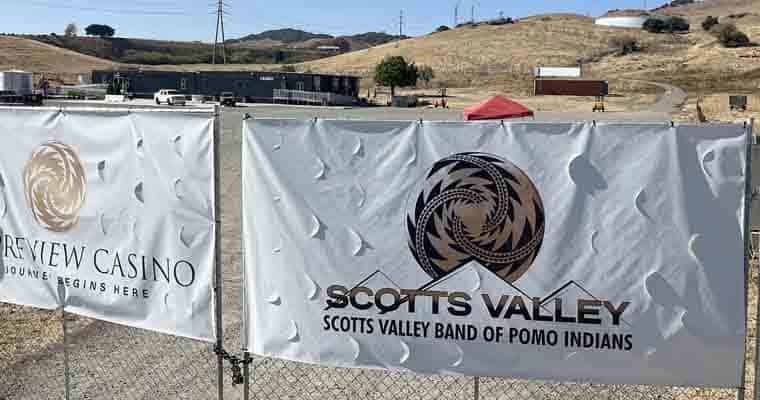
Plans for a major new casino in California’s Bay Area have hit an unexpected federal roadblock, leaving the Scotts Valley Band of Pomo Indians preparing for another legal fight.
The U.S. Department of the Interior reversed an earlier gaming eligibility determination involving the tribe’s land in Vallejo, putting its proposed $700 million casino and resort development on hold. The decision also forced the closure of a small temporary casino that had operated at the property for only a matter of days.
That temporary operation was modest compared with what the tribe ultimately envisioned. A handful of gaming machines were placed inside trailers as a preview of a much larger casino development planned for a 160-acre property near Interstate 80 and State Route 37.
The problem was not simply whether Vallejo wanted another casino.
Federal officials concluded that the Scotts Valley Band had failed to establish the historical connection to the property required for gaming under the applicable federal framework. The Interior Department’s review considered historical material including maps, census records and documents connected with Chief Augustine, an ancestor of numerous Scotts Valley tribal members. Despite that evidence, the department concluded the necessary connection to the Vallejo land had not been established.
The tribe has indicated that the dispute is far from finished. Scotts Valley officials said they intend to challenge the federal decision in court.
For California gamblers, meanwhile, the controversy highlights something bigger than one Bay Area development: access to casino gambling in the state remains closely tied to tribal gaming and complicated state and federal rules.
Online Gambling Remains
Despite the lack of state-licensed gambling sites, residents and visitors have access to offshore sites. Offshore CA gambling sites offer casino games, sports betting, poker, horse race betting, and more.
California players often seek out offshore sites for their additional welcome bonuses, cryptocurrency acceptance, and the fact that many sites accept players over 18. However, if you do choose to wager online, it is important to vet each site for player reputation, licensing, and compliance records.
Our LegalBettingOnline.com guide to the fastest paying casinos is a great starting point for players looking for legit sites that accept players from the Golden State.
CA Tribal Casinos
California has one of America’s largest tribal gaming markets, but opening a new tribal casino isn’t as straightforward as purchasing land and building a gaming floor.
The Vallejo dispute shows just how complicated the process can become when questions of tribal history, federal trust land and competing territorial claims enter the picture.
The proposed Scotts Valley resort also faced opposition from other tribal governments. Lytton Rancheria, which operates San Pablo Lytton Casino in the East Bay, raised concerns connected to the project. KALW reported that court filings from Lytton Rancheria indicated the proposed casino could reduce revenue at its San Pablo property. Lytton representatives, however, have maintained that their objection concerns consistent application of federal standards rather than competition.
The Yocha Dehe Wintun Nation has separately challenged Vallejo agreements associated with the Scotts Valley project. Its June 2026 lawsuit targeted city approvals involving an encroachment permit and memorandum of understanding connected to the temporary casino.
The permanent project carried an estimated $700 million price tag. Its location also would have placed another significant gaming property within reach of the densely populated Bay Area. The San Pablo Lytton Casino is currently the closest tribal casino to San Francisco, while the proposed Vallejo development would have been roughly another 20 minutes away, according to KALW.