
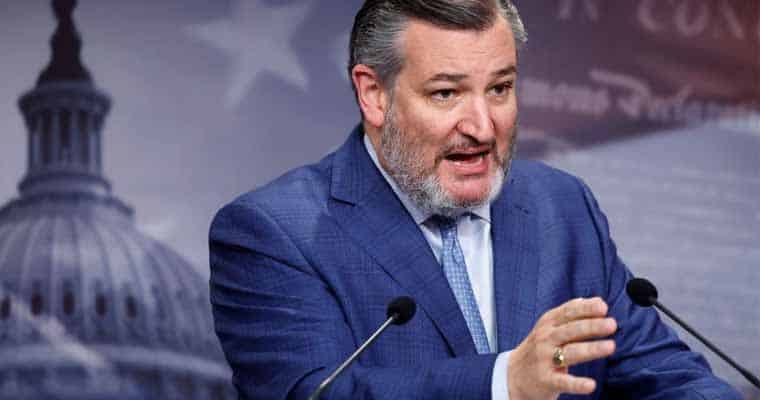
U.S. Sen. Ted Cruz is preparing legislation that would require prediction markets offering gambling-related event contracts, including sports contracts, to obtain authorization from a state or tribal government. The Texas Republican plans to introduce the bill after the November midterm elections.
The proposal would challenge the current federal approach to sports prediction markets and could reshape how platforms offer contracts tied to sporting outcomes across the United States.
Cruz Proposal Would Require State or Tribal Approval
Details of the planned legislation emerged after Bloomberg Law obtained information about the bill. The measure would prevent federally regulated prediction markets from offering event contracts connected to gambling activities unless a state or tribal government authorizes them.
Sports-related contracts sit at the center of the bill because states and tribes have traditionally regulated sports wagering through gaming laws, licenses, and tribal-state agreements. Cruz’s proposal would try to stop prediction market platforms from using federal derivatives oversight to sidestep those systems.
The bill has not yet been introduced, and its text has not been released. Important questions remain, including how authorization would work and whether the proposal would cover every type of event contract or only those linked to gambling.
Federal and State Authority at the Center of Dispute
The legislation arrives amid a broader conflict between state gambling regulators and the Commodity Futures Trading Commission, or CFTC. The federal agency has asserted exclusive jurisdiction over derivatives markets, including event contracts traded on registered designated contract markets.
A Congressional Research Service analysis explains that the CFTC has taken the position that federally regulated sports event contracts are not subject to state or tribal regulation over legalized sports gambling. That stance has placed sports prediction markets at the center of a jurisdictional dispute between federal derivatives law and state gaming authority.
The relevant federal framework includes the Commodity Exchange Act, which governs derivatives markets and gives the CFTC oversight of contracts traded on designated markets. Congress is also examining the issue through policy discussions documented in the Congressional Research Service report on prediction markets.
Why Sports Contracts Are Different From Other Markets
Prediction markets can offer contracts based on elections, economic indicators, weather, and other outcomes. Sports contracts, however, closely resemble online sports wagers because their value depends on the result of a game, match, or competition.
That resemblance has raised questions about consumer protection, integrity monitoring, licensing, taxation, and responsible gambling. State and tribal authorities generally argue that sports contracts should follow the same safeguards that apply to other forms of sports wagering within their jurisdictions.
The CFTC and prediction market operators counter that qualifying contracts are financial instruments governed by US gambling laws. These competing interpretations have already produced disputes in court and between federal officials and state regulators.
Proposal Could Affect Prediction Market Availability
If enacted, Cruz’s bill could require platforms to seek approval in each state or tribal jurisdiction where they want to offer gambling-related event contracts, creating a framework closer to state-by-state sports betting regulation than a single federal market.
The practical effect would hinge on the final bill text, which jurisdictions choose to authorize sports contracts, and how federal regulators interpret the new requirements. Because the bill has not been formally filed, no new licensing system exists yet.
For online sports bettors, the measure could determine whether prediction markets remain available alongside traditional sportsbook products. That impact would vary by jurisdiction, particularly in states where sports betting is restricted or where tribal governments hold significant gaming authority.
What This Means for US Sports Bettors
For now, Cruz’s proposal is a forthcoming bill rather than an enacted change in federal or state gambling law. Sports bettors should treat the announcement as a signal of a possible regulatory shift, not as an immediate change to the availability of prediction market contracts.
Legal offshore gambling remains subject to the laws that apply in each bettor’s jurisdiction, so readers should consider those laws before using any gambling site. Adults using recommended offshore sites should meet the applicable legal age requirement, and gambling should remain within personal limits.
Sources: